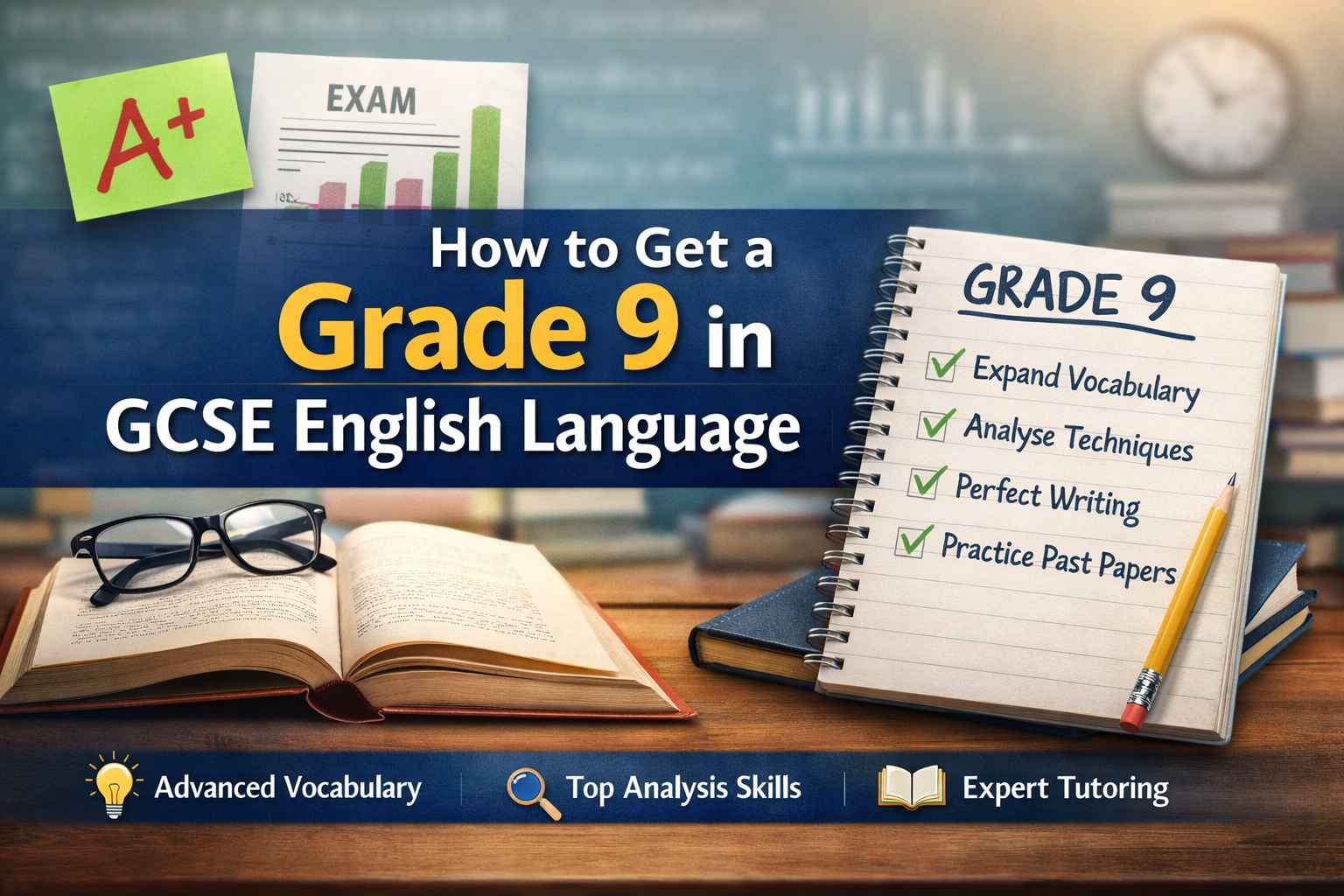
Achieving a Grade 9 in GCSE English Language is the highest possible outcome and reflects exceptional reading, writing, and analytical ability. While many students believe this grade is only for “naturally gifted” learners, the truth is that with the right preparation, techniques, and consistent practice, any determined student can reach this level. Understanding how the exam works, what examiners are looking for, and how to structure high-quality responses is the key to success.
At Bright Mind Tutors, we help students develop the skills and confidence needed to perform at the very top of the mark scheme.
1. Understand the GCSE English Language Exam in Detail
Before revising content, you must clearly understand the structure of the exam and how marks are awarded. The GCSE English Language qualification is divided into two papers, each testing different but equally important skills.
Paper 1 – Explorations in Creative Reading and Writing
This paper focuses on fiction and imaginative writing. Students are assessed on:
-
Analysing how writers use language and structure
-
Interpreting meaning and effects
-
Producing a descriptive or narrative piece of writing
Paper 2 – Writers’ Viewpoints and Perspectives
This paper focuses on non-fiction and comparison. It tests:
-
The ability to compare two texts
-
Understanding of viewpoints and opinions
-
Persuasive or argumentative writing skills
Knowing exactly what each question requires allows you to plan answers strategically and avoid wasting time or marks.
2. Build a Grade 9 Vocabulary Through Regular Reading
Vocabulary is one of the most visible differences between average and top-grade students. Grade 9 responses use precise, varied, and sophisticated language naturally. This does not come from memorising word lists alone, but from reading widely and regularly.
You should aim to read:
-
Novels and short stories
-
Newspaper articles and opinion columns
-
Speeches and essays
-
High-quality online journalism
As you read, note down effective words, phrases, and sentence structures. Practise using them in your own writing so they become part of your natural style rather than forced additions.
3. Develop Perceptive and Critical Analysis
Examiners reward students who can think deeply about a text and explain how writers create meaning. Simply spotting techniques is not enough for a Grade 9. You must explore the writer’s intentions and the effect on the reader.
High-level analysis focuses on:
-
Language choices (imagery, metaphor, personification, tone)
-
Structural features (beginnings, endings, shifts in focus, contrasts)
-
Writer’s purpose and viewpoint
-
Emotional and psychological impact on the reader
Always support your ideas with short, relevant quotations and link them directly to the question.
4. Master Creative and Transactional Writing
Writing tasks carry a large number of marks, so improving your writing style can dramatically raise your overall grade. Grade 9 writing is controlled, engaging, and well structured. It shows clear awareness of audience, purpose, and form.
To improve your writing:
-
Plan your response before you start
-
Use a range of sentence lengths and structures
-
Create vivid descriptions using sensory details
-
Use rhetorical techniques in persuasive tasks
-
End with a strong and memorable conclusion
Accuracy in spelling, punctuation, and grammar is also essential, as technical control is part of the assessment.
5. Use Time Effectively in the Exam
Even excellent students can lose marks through poor time management. Each question is carefully weighted, so your time should reflect the marks available.
A successful timing strategy includes:
-
Spending roughly one minute per mark
-
Prioritising higher-mark questions
-
Moving on if you are stuck
-
Leaving time at the end to proofread and correct errors
Regular practice under timed conditions will help you feel calm and confident in the real exam.
6. Study the Mark Scheme and Examiner Reports
Understanding what separates a Grade 7 from a Grade 9 is crucial. Top-band answers are:
-
Conceptual and critical, not just descriptive
-
Well-structured and clearly expressed
-
Closely focused on the question
-
Supported by precise evidence and terminology
Reading examiner reports and model answers helps you recognise what excellence looks like and how to replicate it in your own work.
7. Get Professional GCSE English Support
Personalised tutoring can make a major difference, especially for students aiming for the highest grades. A specialist tutor can:
-
Identify weaknesses quickly
-
Provide targeted feedback
-
Teach advanced exam techniques
-
Help students develop confidence and fluency
Bright Mind Tutors offers expert GCSE English Language tuition, with experienced teachers who understand exam board expectations and know how to guide students towards Grade 9 performance.
8. Practise Regularly and Improve Through Feedback
Consistent, focused practice is essential. Completing past papers, reviewing mistakes, and rewriting answers based on feedback helps students make rapid progress.
Effective practice should include:
-
Full papers under exam conditions
-
Detailed teacher feedback
-
Redrafting written responses
-
Reflecting on how to improve analysis and expression
Conclusion
Achieving a Grade 9 in GCSE English Language is not about luck or talent alone. It is the result of understanding the exam, building strong reading and writing skills, practising effectively, and applying smart exam techniques. With the right guidance and structured preparation, students can develop the confidence and ability needed to reach the very top of the mark scheme.
With support from Bright Mind Tutors, students can transform their performance and work towards outstanding GCSE success.