A week-by-week strategy that actually feels manageable for students and parents preparing for Cambridge and Edexcel IGCSE exams.
Preparing for the May–June 2026 IGCSE exams often feels far more stressful than students expect. Whether you are sitting Cambridge IGCSE or Edexcel IGCSE, the final five weeks can feel overwhelming when multiple subjects demand attention at once.
Even those who have studied throughout the year usually reach the final weeks feeling that there are still too many chapters left, too many formulas to remember, and not enough time to revise everything properly. The pressure increases further when multiple subjects demand attention at the same time.
The good news is that five weeks is still enough time to make meaningful progress, provided revision is planned carefully. What usually creates stress is not the amount of content, but the absence of a clear structure. When students revise randomly, they often spend hours studying without feeling confident about what has actually improved.
At Bright Mind Tutors, we have guided hundreds of students through this exact stage, and this plan reflects what genuinely works.
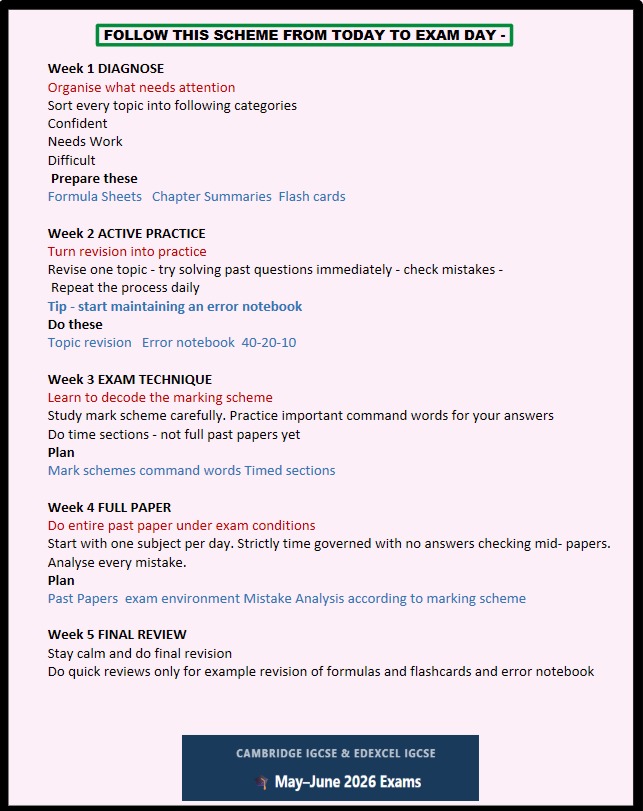
Week 1: Start by Organising What Really Needs Attention
The first week should begin with clarity rather than heavy studying. Before opening past papers or trying to revise every chapter, it helps to understand exactly which topics need the most work. A student who knows where the weak areas are can use time much more effectively than someone who studies in random order.
A practical way to begin is to divide each subject into three categories:
- topics that already feel comfortable
- topics that need revision
- topics that still feel difficult
For example, in Cambridge IGCSE Mathematics you may feel confident with percentages but still hesitate on trigonometry. In Edexcel IGCSE Biology, diagrams may feel easy while long explanation-based questions still need work. This simple subject audit immediately gives direction.
Once that is done, the first week should focus mainly on difficult chapters. Instead of rewriting long notes, it is better to create short revision material such as formula sheets, quick chapter summaries, and concept cards. This makes later revision much faster because key ideas become easier to revisit.
By the end of week one, the aim is not complete mastery. The goal is to make weak topics feel familiar enough that they no longer create anxiety when you see them again.
Week 2: Turn Revision Into Active Practice
After weak areas have been identified, the second week should focus on making revision more active. Many students spend too much time reading chapters repeatedly, but exam improvement usually happens only when information is tested.
A strong method during this stage is simple: revise one topic and immediately solve questions from that same chapter. This creates an instant connection between theory and exam application.
A useful daily pattern during this week can look like this:
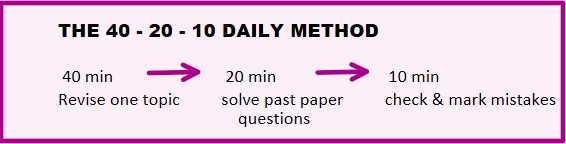
- revise one topic for forty minutes
- solve related questions for twenty minutes
- spend ten minutes checking mistakes
This works because mistakes immediately reveal where understanding is incomplete. After revising chemical bonding for Cambridge IGCSE Chemistry, solving five topic questions often shows whether concepts are truly clear — or only familiar in theory. Maintain a separate notebook for repeated errors. These small mistakes, written consistently, often become your most valuable revision tool later.
The same applies in subjects like Economics, Physics, or Business Studies, where students often feel confident until they begin writing answers.
Week 3: Shift Focus Towards IGCSE Exam Technique
By the third week, revision should begin feeling more like exam training rather than ordinary studying. At this stage, students usually know most topics at least once, so the next step is learning how marks are actually awarded.
One reason students lose marks in IGCSE exams is that answers may be correct in meaning but incomplete in examiner language. This is especially common in subjects where keyword precision matters.
That is why this week should include regular mark scheme checking. After solving questions, compare answers carefully and notice which words appear repeatedly in official marking patterns.
Focus especially on command words such as:
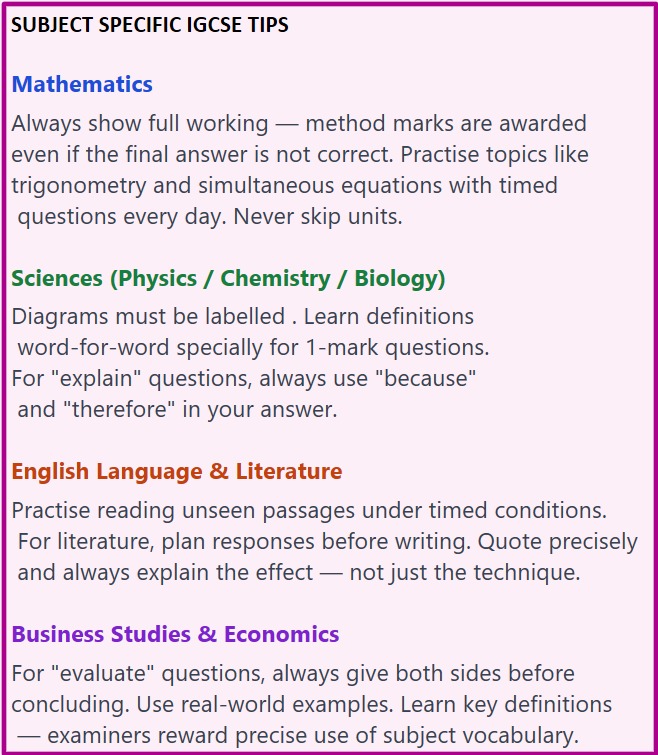
- Explain (Give reasons — use “because” and “therefore”)
- compare (State similarities and differences clearly)
- describe(State what something looks like or how it happens)
- evaluate(Weigh up both sides and reach a supported conclusion)
Each of these requires a different style of response, and understanding that difference improves marks quickly.
Instead of full papers immediately, timed sections work better at this stage. A timed section helps students improve speed without feeling overwhelmed by an entire paper.
Week 4: Full Cambridge & Edexcel Past Papers Become Essential
Once major topics have been revised and smaller timed sections feel comfortable, week four should focus strongly on complete past papers. This is usually where students begin noticing real improvement because full papers reveal patterns that topic revision often hides.
A student may know formulas perfectly but still lose marks because of poor time management. Another may understand theory but misread longer questions under pressure.
A complete paper helps identify these issues clearly.
A practical approach is to choose one subject each day and complete one paper under proper exam conditions:
- sit without distractions
- follow exact time limits
- avoid checking answers during the paper
After finishing, the most important part is analysing mistakes properly. Instead of only seeing the final score, look carefully at why marks were lost.
Often the same reasons appear repeatedly:
- rushed reading
- incomplete explanations
- forgotten units
- careless calculation slips
These repeated mistakes should be written separately because they become extremely useful in the final week.
Week 5: Final Revision Should Be Focused and Calm
The final week before exams should not feel heavy. At this point, trying to cover too much new material often increases stress rather than helping performance.
This week should focus only on high-value revision material that can be reviewed quickly and confidently.
The most useful things to revise now are:
- formulas and definitions
- difficult diagrams
- key vocabulary
- repeated past paper mistakes
A calm routine works better than long exhausting study sessions. Short focused revision blocks usually improve retention far more than continuous late-night studying.
Sleep also matters significantly during this stage because memory becomes less reliable when rest is poor. Students often underestimate how much clear thinking depends on proper sleep before exams.
The aim in the final week is simple: enter the exam hall feeling organised, not overloaded.
Final Thought
A five-week revision plan works because it removes confusion. Instead of asking every day what to study next, students follow a clear progression from weak topics to full exam practice.
Consistent work over five focused weeks often produces far stronger results than longer periods of unstructured studying. What matters most is not whether preparation started late, but whether the remaining time is used intelligently.